
Top products in the Market
Top products in the Market
Expert-reviewed compact desktops for performance, portability, and value, top Amazon picks.
Mini PCs have never been more capable. Thanks to AMD's Ryzen 7000 and 8000 series mobile chips, and Intel's 12th and 13th Gen processors, you can now get workstation-class performance in a box smaller than a paperback novel. Whether you need a silent home theatre PC, a developer workstation, or a portable gaming rig, the 2026 mini PC market has an option tailored to your use case.
Amazon stocks an excellent range from brands like GEEKOM, MINISFORUM, GMKtec, and BOSGAME, with fast delivery and local warranty support. Below we've ranked the 10 best mini PCs available right now, from the most affordable entry-level units to the most powerful AI workstations.
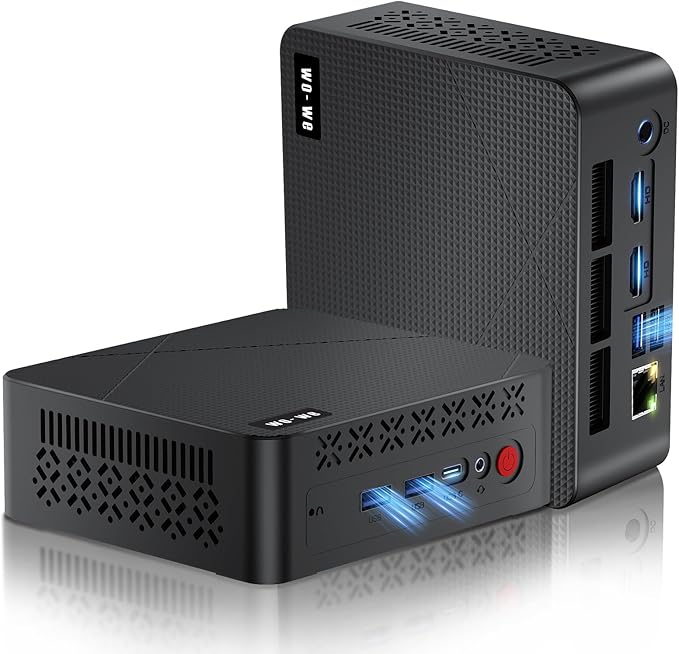
Best for: Ideal for gamers seeking a compact and powerful mini PC.

Best for: Perfect for creative professionals needing high-performance computing in a small form factor.

Best for: Great for gamers and content creators looking for a compact powerhouse.

Best for: Best for tech enthusiasts looking for a customizable mini PC experience.
![GEEKOM Mini PC IT12 Windows 11 Pro [Best Intel NUC 12 Alternative] 12th Gen Inte](https://m.media-amazon.com/images/I/71p4luYbniL._AC_SX679_.jpg)
Best for: Ideal for users wanting a powerful and compact desktop for gaming and productivity.
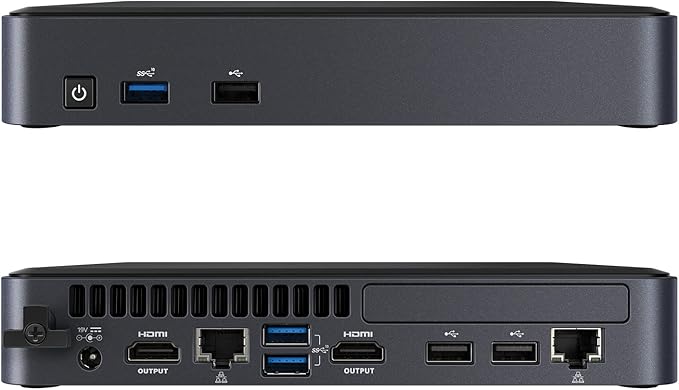
Best for: Best for budget-conscious users who need reliable performance in a compact design.
Best for: Perfect for small office setups needing reliable performance without taking up too much space.

Best for: Suited for gamers and professionals looking for a compact yet powerful computing solution.

Best for: Great for businesses seeking a reliable and manageable mini-PC solution.

Best for: Best for casual users seeking an affordable and compact desktop solution.
Mini PCs are ideal for home offices, living room media centres, digital signage, light gaming with integrated graphics, and as thin client computing terminals. They perform excellently at web browsing, video conferencing, office productivity, and 4K media playback. Modern mini PCs with AMD Ryzen or Intel Core processors handle most everyday tasks as well as a full-size desktop. Their compact size, low power draw, and quiet operation make them particularly suitable for space-constrained setups.
For everyday computing, yes. Current mini PCs with mid-range AMD or Intel processors handle web browsing, Microsoft 365, video streaming, and light photo editing without issue. Where they fall short compared to tower desktops is in thermal headroom for sustained heavy workloads, GPU power for gaming or video rendering, and storage expansion options. For a home office workstation or a secondary computer, a mini PC comfortably replaces a full-size desktop for most users.
Most mini PCs allow RAM and storage upgrades, which are the two most impactful components for everyday performance. RAM is typically in SO-DIMM slots (the same as laptop memory) and can often be doubled at a later date. Storage uses M.2 NVMe slots in most current models. CPU, GPU, and motherboard components are fixed and cannot be changed. When buying, prioritise getting enough RAM upfront (16GB minimum) since some ultra-compact models have partially soldered configurations.
A mini PC and laptop serve different needs. A mini PC is better value for the performance per dollar when used at a fixed desk with an external monitor, keyboard, and mouse. It runs cooler and quieter than a laptop at the same performance level and is easier to upgrade. A laptop wins when portability is needed. For users who already own a tablet or laptop for travel and want an affordable, efficient home desktop, a mini PC is an excellent and practical choice.