
Top 10 Network Adapters Ranked

Best for: Ideal for gamers and streamers seeking high-speed connectivity.
Pros
Cons

Best for: Great for tech enthusiasts wanting cutting-edge wireless performance.
Pros
Cons

Best for: Perfect for users looking to upgrade older PCs to WiFi 6.
Pros
Cons

Best for: Best for users wanting high-speed internet for gaming and heavy downloads.
Pros
Cons

Best for: Excellent for users needing a reliable Wi-Fi connection at home.
Pros
Cons

Best for: Ideal for gamers and streamers needing ultra-low latency.
Pros
Cons

Best for: Best for laptop users wanting to upgrade their wireless capabilities.
Pros
Cons
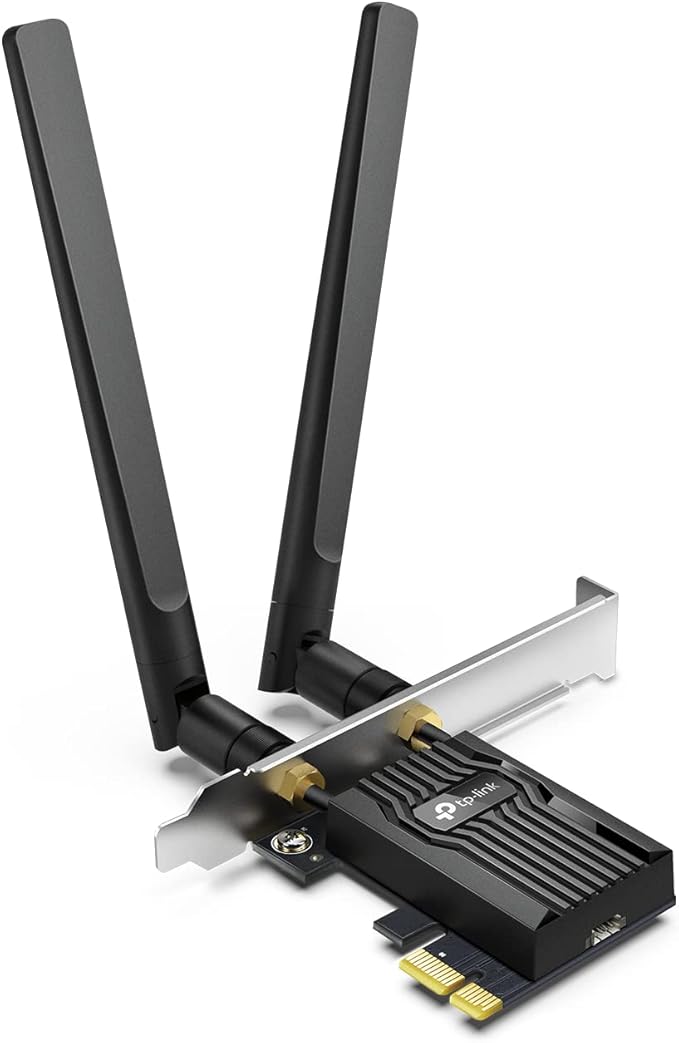
Best for: Great for desktop users wanting high-speed, low-latency connections.
Pros
Cons

Best for: Perfect for users needing to boost their Wi-Fi signal strength.
Pros
Cons

Best for: Ideal for users looking for an easy-to-install Wi-Fi upgrade.
Pros
Cons
Frequently Asked Questions
What is the difference between USB WiFi and PCIe WiFi adapters?
USB WiFi adapters are plug-and-play, work on any computer with a USB port, and require no installation inside the case. They are convenient but typically deliver lower performance than PCIe adapters due to USB bandwidth limitations and less efficient antenna positioning. PCIe WiFi adapters install inside the desktop case and connect to the motherboard, offering better signal strength, higher throughput, and support for external antennas positioned on the back of the case. For casual use, USB adapters work fine. For a permanent desktop setup, PCIe cards deliver noticeably better and more stable connectivity.
Is WiFi 6 worth it for home use?
If your router supports WiFi 6 (802.11ax), adding a WiFi 6 adapter to your desktop provides faster speeds in congested environments and better performance when multiple devices are connected simultaneously. In a home with three or four devices, the real-world improvement over WiFi 5 is modest. WiFi 6E, which adds the 6GHz band, provides meaningfully less interference in apartment buildings and dense urban areas. If your router is more than four years old, upgrading the router provides more benefit than upgrading just the adapter.
Is wired Ethernet always faster than WiFi?
A wired Gigabit Ethernet connection is more stable, lower latency, and more reliable than WiFi, though not always faster in raw throughput for typical home internet speeds. WiFi 6 can theoretically exceed 1Gbps, but real-world performance varies with interference, distance, and concurrent users. For gaming, video calls, and applications where consistent low latency matters more than peak speed, wired Ethernet provides a meaningfully better experience. For a desktop that sits near your router, running a cable is a simple upgrade worth doing.
Can I add WiFi to a desktop that has no wireless card?
Yes, two easy options exist. A USB WiFi adapter is the simplest approach: plug it in and install the driver. A PCIe WiFi card slots into the motherboard and provides better performance plus external antenna options. If running a cable is an option, a Gigabit Ethernet connection is more reliable than either wireless solution. For rental properties or situations where running a cable is impractical, a USB WiFi 6 adapter provides a convenient and effective solution.